Bedding · Fabric & Comfort
How Naturepedic’s Waffle Weave Shapes an Organic Cotton Blanket
A blanket’s texture is more than a finishing touch. The raised cells and recessed channels of waffle weave influence how fabric feels, how it hangs, and how air moves through it. Naturepedic’s organic cotton waffle blanket offers a clear example of how construction and fiber work together in an everyday layer.
Published November 5, 2026
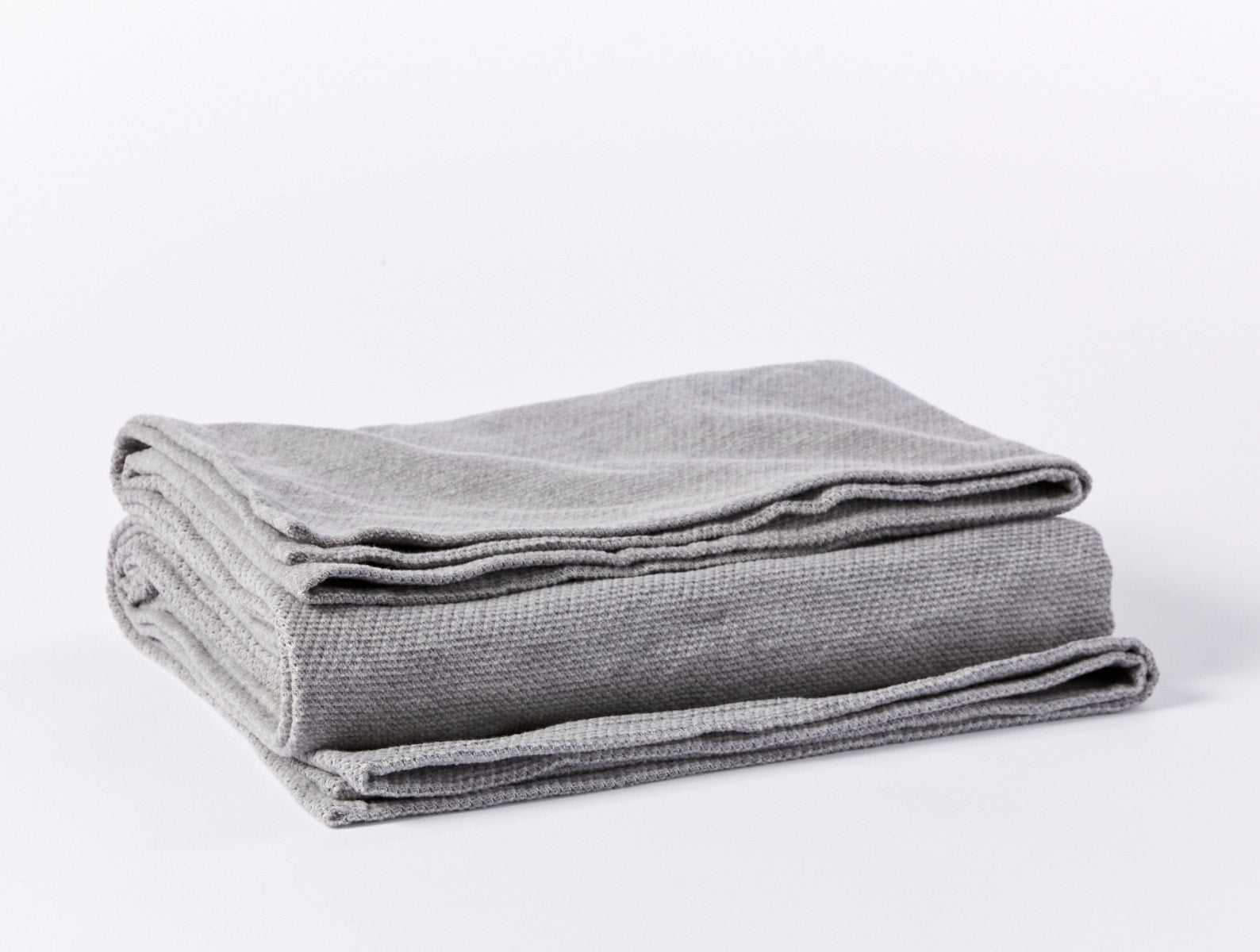
Some blankets announce themselves with dramatic color or a bold pattern. A waffle-weave blanket takes a quieter route: its surface is the design. Look closely and you’ll see a grid of raised squares, each separated by small recessed channels. Run a hand across it and that structure becomes a tactile feature, not just a visual one.
That woven relief also has a practical role. A waffle pattern creates a different surface and drape from a smooth, tightly woven blanket, and its open texture can encourage air to move through the fabric. The result is a layer many people find useful when they want comfort without the enveloping feel of a thick, dense cover.
Naturepedic’s Organic Cotton Waffle Weave Blanket brings those ideas together in certified organic cotton. Its dimensions vary by size, with twin, full/queen, and king options, and its care instructions call for a warm machine wash and low tumble drying. Understanding why the weave feels the way it does—and how cotton affects its performance—can help you decide whether this kind of breathable bedding suits your bed, sofa, or favorite reading spot.
What makes a waffle weave different?
Waffle weave is named for its resemblance to the familiar grid of a waffle. In textiles, the pattern is formed by alternating raised areas and recessed channels. Those small pockets give the surface dimension, so the blanket feels textured rather than flat. The precise scale and depth of the pattern depend on how the fabric is woven and on the yarn used.
Unlike a printed pattern, the waffle effect is built into the fabric’s structure. The raised sections catch the light, while the indented channels create subtle shadow. That gives a solid-colored blanket visual interest without requiring a contrasting print, fringe, or elaborate embellishment. It can look at home in a simple bedroom just as easily as in a layered living room.
The pattern also affects how the blanket sits. A waffle weave is often pliable, with a surface that compresses and shifts gently when handled. Its texture gives it a little more character than a plain weave, yet it generally remains easy to fold, drape, or layer. That balance is part of its appeal: texture is present, but the blanket can still serve as an everyday textile rather than a purely decorative accent.
Keep in mind that “waffle weave” describes construction, not a guaranteed level of softness, warmth, or quality. Yarn type, fabric weight, finishing, and size all matter. Two blankets with a similar grid can feel quite different in use. For a thoughtful comparison, consider the weave alongside the fiber and care label rather than judging by texture alone.
How the texture can support airflow
The channels in a waffle weave create a raised, uneven surface rather than one continuous flat plane. Depending on the fabric’s density and weight, that structure can leave room for air to move around the textile. This is one reason waffle blankets are often considered for people who want a breathable layer or prefer not to feel covered by a heavy, closely packed blanket.
Airflow is not a promise that a blanket will feel cool in every room or season. A blanket’s warmth depends on more than its surface pattern: the fiber, thickness, construction, room temperature, and layers underneath all contribute. A dense, substantial waffle fabric may feel warmer than a very light one, while the same blanket may seem especially comfortable in a cool room or over a thin sheet.
Think of breathability as part of a system. On a bed, a waffle blanket may work as a top layer over a sheet, where it adds a touch of warmth without automatically requiring a bulky comforter. On a sofa, it can be a comfortable cover during a mild evening, or an extra layer when the room is cooler. If you tend to feel warm under heavy bedding, a textured cotton layer may be worth considering, but personal comfort and the specific blanket’s weight remain decisive.
Layering gives you flexibility. Use the blanket on its own when the room feels mild, then add a duvet or another cover when temperatures drop. A breathable blanket is not necessarily a substitute for insulation in cold conditions; it is a versatile component whose role can change with the season and your own preferences.
Why fiber matters as much as weave
Naturepedic’s waffle blanket is made from organic cotton. Cotton is a familiar bedding fiber, valued for its soft hand, everyday practicality, and ability to work across a range of home settings. The waffle construction supplies the characteristic relief and texture; cotton supplies the material qualities you feel against your skin and encounter when caring for the blanket.
Organic describes how the cotton is grown and processed under the applicable certification standards; it does not, by itself, determine whether a blanket feels plush, crisp, light, or warm. Those sensations come from the complete textile: yarn, weave, finish, and fabric weight. If certification is important to you, check the product’s stated certification and what it covers rather than assuming that every use of the word “organic” means the same thing.
Compared with some lofty synthetic fabrics, cotton can feel less fuzzy and more breathable to the touch. It may suit someone who prefers a natural-fiber surface or wants a blanket that can be used as a light layer without a high-pile feel. However, cotton blankets vary widely. A compact cotton weave and a textured waffle weave will not have identical drape, surface, or warmth, even when both use the same fiber.
Fiber choice also affects maintenance. Cotton is commonly machine washable, but washing temperature, drying method, and handling should always follow the item’s own care instructions. The Naturepedic blanket’s stated directions are machine wash warm, tumble dry low, with no ironing and no bleach. These details matter: an appealing textile is more useful when its care routine fits the way you live.
A closer look at Naturepedic’s blanket
Naturepedic’s Organic Cotton Waffle Weave Blanket pairs a textured, breathable construction with organic cotton and a restrained, versatile look. The waffle pattern offers a noticeable hand-feel without relying on a busy motif, making it a natural fit for rooms where texture is welcome but visual calm is the goal.
The blanket is offered in three listed sizes: twin at 65 by 90 inches, full/queen at 90 by 90 inches, and king at 108 by 90 inches. A larger size can provide more coverage across a mattress or make it easier to share while lounging. Still, dimensions should be considered against the actual bed, the amount of overhang you like, and whether you want the blanket to cover a person, a piece of furniture, or both.
The product information describes the blanket as soft yet durable and notes that it is pre-washed. It is also described as becoming softer with washing, while its weave is designed to maintain its shape and texture through everyday laundering. As with any woven blanket, following the care label is the most reliable way to preserve the fabric. Avoid adding bleach or ironing, as the listed instructions advise against both.
For a bed, the waffle surface can bring dimension to a smooth sheet set or sit beneath a heavier cover as an additional layer. For a sofa, it can offer comfortable coverage and a subtle point of texture. In either setting, its value lies in combining a tactile surface with practical everyday use—not in turning a single blanket into a solution for every temperature or need.
Choosing the right size for your space
“Oversized” can mean different things depending on where a blanket will live. A throw that feels generous on an armchair may not provide enough coverage for a bed, while a blanket sized for a larger mattress may feel cumbersome if you mainly want something to wrap around your shoulders. Start with the intended use, then compare the blanket’s actual measurements with your furniture or bedding.
- For a bed: Decide whether the blanket is a decorative top layer, a practical cover for sleeping, or an extra layer beneath a comforter. Consider mattress width, desired drape, and whether you share the bed.
- For a sofa: Think about whether you want full-body coverage while reclining or a smaller layer for your lap. A generous rectangle can be useful, but it should still be comfortable to fold and store.
- For a chair or reading nook: A smaller blanket may be easier to keep within reach and less likely to trail on the floor.
- For more than one room: Choose dimensions that are genuinely convenient in both settings, not simply the largest option available.
For Naturepedic’s blanket, the twin size measures 65 by 90 inches, full/queen measures 90 by 90 inches, and king measures 108 by 90 inches. Those figures provide a useful starting point, but a tape measure offers a more dependable answer than a size name alone. Measure your mattress or seating area and consider the way you want the blanket to fall at the edges.
Styling a waffle blanket without making the room feel busy
Texture can do a lot of decorative work without a strong print. A waffle blanket looks especially natural alongside smooth cotton sheets, crisp percale, plain upholstery, or a simple duvet. The contrast between a raised grid and a flatter surface creates depth while keeping the overall palette quiet.
On a bed, fold the blanket across the foot to create a defined band of texture, or spread it over the bed when you want the weave to be more prominent. If the rest of the bedding already includes stripes, checks, or a large-scale motif, a solid waffle blanket can offer a visual pause. In a room with mostly solid fabrics, the pattern itself can become the subtle detail that makes the arrangement feel considered.
On a sofa, drape the blanket over the back or fold it along one arm so it is both visible and easy to reach. A compact fold keeps the textured surface neat; a looser drape makes the room feel more relaxed. Either approach works best when the blanket has a clear purpose—ready for a cool evening, rather than placed so carefully that no one wants to use it.
Color can shift the mood. A pale neutral makes the weave’s shadows more apparent and pairs easily with varied furnishings. Deeper or more saturated colors can make the same texture feel more pronounced and cozy. Choose a shade that works with existing textiles, but remember that the surface pattern itself already adds dimension; extra decorative elements are optional.
Care tips for keeping the weave comfortable
Good care starts with the manufacturer’s instructions. For Naturepedic’s blanket, the stated routine is warm machine washing and tumble drying on low. The guidance also says not to bleach or iron it. Following those directions is more useful than applying a generic rule for all cotton blankets, since finishes and woven structures can differ.
- Check the care label first. Confirm the exact instructions before washing, especially if the blanket has been combined with other textiles in a load.
- Use a suitable cycle and load size. A blanket needs room to move through the wash. An overloaded machine can prevent thorough cleaning and place unnecessary strain on the fabric.
- Follow the recommended drying setting. Low tumble drying is listed for this blanket. Remove it promptly when dry to reduce creasing and keep the fabric ready to use.
- Skip bleach and ironing. Both are specifically discouraged in the blanket’s care instructions.
- Store it clean and fully dry. Fold the blanket loosely in a dry place between seasons, rather than putting it away while damp.
Waffle texture is part of the fabric, so gentle, label-led care is preferable to trying to flatten or reshape the surface. If a blanket ever appears uneven after laundering, lay it out and allow it to settle before judging its final shape. Avoid aggressive pulling on the grid or edges; the fabric should be handled as a woven textile, not stretched into place.
Is waffle weave right for every season?
It can be useful across seasons, but the answer depends on the blanket’s weight and how you layer it. A lighter cotton waffle blanket may serve as a comfortable stand-alone cover on a mild night or as a breathable layer over sheets. In colder weather, it can add texture and another level of warmth beneath a heavier comforter. Warmth comes from the total bedding arrangement, not the pattern by itself.
In warmer months, some people prefer a light layer that feels less dense than a thick plush blanket. The waffle structure and cotton fiber may make that kind of use appealing, though room temperature, humidity, and personal sleep preferences still matter. In winter, the same blanket can be part of a layered bed or an easy cover for lounging, with additional insulation added when needed.
For a sofa, seasonal usefulness is similarly flexible. Keep it folded nearby for evenings when the room cools, or use it as a light cover while reading. A blanket’s usefulness is often less about being assigned to one season and more about being easy to bring into the arrangement when comfort calls for it.
Questions to ask before choosing an organic cotton blanket
A few practical questions can help narrow down what will work for your home:
- Do I want texture or a smooth surface? A waffle weave gives a tactile, visibly dimensional finish. If you prefer an entirely smooth hand, another construction may feel more familiar.
- How much warmth do I need? Look for information about weight and construction, and consider whether the blanket will be used alone or layered.
- Where will it be used most? Bed, sofa, chair, and travel use can each call for different dimensions and degrees of portability.
- Does the care routine suit my household? Check washing and drying requirements rather than assuming all cotton blankets can be treated alike.
- What does the certification cover? If organic production is a priority, review the stated certification and product details carefully.
These considerations are especially useful when shopping for an oversized throw blanket. Generous dimensions can be wonderfully practical, but a larger blanket also takes up more space in a washer, dryer, closet, or linen cupboard. Fit, feel, and maintenance are all part of choosing well.
The comfort is in the combination
A waffle-weave blanket is a reminder that construction can influence the everyday character of a textile. The raised grid makes the surface distinctive, the channels give it an airy visual rhythm, and the drape can feel different from that of a flat, tightly woven cover. When made from organic cotton, the fiber adds its own familiar, practical qualities to the experience.
Naturepedic’s Organic Cotton Waffle Weave Blanket brings these elements into a straightforward bedding layer with several size options and clear, manageable care instructions. Whether folded across a bed, draped over a sofa, or kept close for a quiet evening, it can add comfort and texture without asking the room to make a fuss about it.
The best choice is the one that suits the way you actually live: the amount of coverage you want, the temperatures you sleep or relax in, the feel you enjoy, and the care routine you can maintain. Waffle weave may be a small detail in the wider world of bedding, but it is precisely the sort of detail that can make a familiar blanket feel thoughtfully made and pleasant to reach for, again and again.
At a glance
- Waffle weave creates a raised grid and recessed channels that give a blanket tactile and visual texture.
- The open-feeling construction can support airflow, although actual warmth depends on weight, fiber, room conditions, and layering.
- Naturepedic’s blanket is made from organic cotton and is available in twin, full/queen, and king dimensions.
- The stated care instructions are warm machine wash, tumble dry low, no bleach, and no ironing.
- Measure your bed or seating area and consider everyday use before choosing a size.